Metal roofing used to mean barns. In Parker it now means standing seam on modern builds, stone coated steel on estates in Pradera and the Timbers, and metal shingle profiles that read like slate from the street. What is driving it here is simple: hail. A metal roof trades the asphalt failure mode, bruised mats and granule loss, for dents that are mostly cosmetic, and it does it over a 40 to 70 year service life.
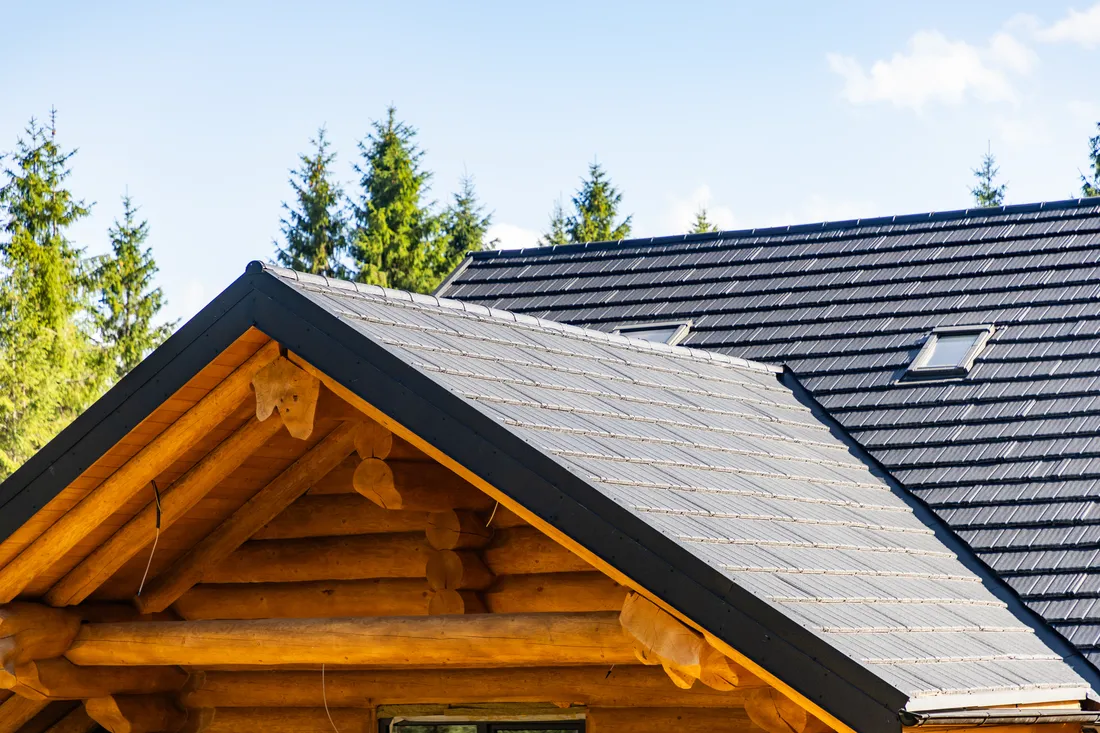
Metal Roofing Options for Parker Homes
- Standing seam: continuous vertical panels with concealed fasteners. The premium option, and the cleanest look on contemporary architecture.
- Stone coated steel: steel panels pressed into tile or shake profiles with a granule surface. Popular in HOA communities because it reads traditional from the street.
- Metal shingles: interlocking panels in slate and shake looks, lighter than tile and friendlier to existing framing.
All three run far lighter than concrete tile, which matters when an estate roof is being converted without re-engineering the structure. Panel finish is the other axis: Kynar class PVDF coatings hold color decades longer than the cheaper polyester finishes, and on a roof you intend to keep for 50 years, the finish is not the line item to economize. We quote both so the trade is visible instead of buried.
Hail and Metal: What to Actually Expect
Steel does not bruise the way asphalt does. Parker's recorded hail range, 1.00 to 1.75 inches in town since 2016, will generally leave a quality metal roof functional, and thicker gauge panels often show nothing at all. Large hail can dent panels cosmetically. Here is the fine print that matters: some Colorado carriers attach cosmetic damage exclusions to metal roofs, meaning they cover punctures and leaks but not appearance dents. Before you buy, we walk you through gauge choices and how your specific carrier treats metal, because the right answer differs between a Stonegate two story and a Pradera estate.
Parker's Mid-Roof Inspection Rule for Stone Coated Steel
The Town of Parker requires a mid-roof inspection on stone coated steel, tile, slate, and similar systems, taken before the roof is more than 25 to 50 percent complete. Asphalt jobs skip this and only need the final. It exists because fastening and underlayment on these systems disappear from view as the roof closes up. It adds a scheduling checkpoint, the Town caps residential roof inspections at 35 per day, and we build that into the timeline so the crew is never standing around waiting on an inspector. Details on the whole process live in our Parker permit guide.
Snow, Wind, and Sun at 5,900 Feet
Metal earns its keep in Parker's other weather too. Snow sheds instead of ice damming, which is worth having on the Divide's north slopes even though Parker's code does not require ice barrier underlayment. Panel systems are rated far beyond the Town's 90 mph shingle spec. And high altitude UV, which chalks and cooks asphalt year after year, mostly just fades a painted steel finish on a schedule measured in decades. Kynar type finishes carry fade warranties that outlast most asphalt roofs entirely.
Metal Roof Questions: Noise, Lightning, and Weight
Three myths come up in nearly every metal conversation. Rain noise: over solid decking and underlayment, a metal roof is no louder inside than asphalt; the barn drum effect requires an open frame no house has. Lightning: metal does not attract strikes, and if anything a struck metal roof disperses energy more safely than a combustible one. Weight: this one runs backwards. Steel systems run roughly one third the weight of asphalt shingles per square and a fraction of concrete tile, which is exactly why estate homes converting from tile can often drop to stone coated steel without structural work. The engineering questions that do matter, fastening schedules for our wind exposure and panel gauge for our hail, are the ones we walk through on the estimate.
What Maintenance a Metal Roof Actually Needs
Less than asphalt, but not zero. Exposed fastener systems, the budget end of metal, need their gasketed screws checked and eventually re-torqued or replaced on a roughly ten year rhythm. Standing seam with concealed fasteners mostly needs its penetration sealants and snow retention hardware looked at occasionally, and debris kept out of valleys. After any major hail event it is still worth a documented inspection, both for the rare functional damage and to keep your insurance file current. We include metal roofs in the same free inspection program as everything else we service.
What a Metal Roof Costs in Parker
Plan on roughly two to three times the cost of an architectural shingle roof: stone coated steel and metal shingles at the lower end of that multiple, standing seam at the top. Complexity moves metal pricing more than it moves asphalt, since every hip, valley, and dormer means custom panel work rather than just more bundles. On a typical Parker home that means a range starting in the low $20,000s and climbing with roof complexity. The honest comparison is cost per year of service life, where 50 year steel frequently beats 18 year asphalt in hail country, before counting the claims and deductibles the steel roof never generates. Current ranges sit on the cost guide.
Getting Metal Through a Parker HOA
The HOA conversation is usually the longest lead item on a Parker metal project. Stone coated steel exists almost specifically for this: profiles that read as tile or shake from the street keep design committees comfortable while the material underneath changes completely. Standing seam approvals depend heavily on the community's architectural era; modern builds in Anthology and newer Stonegate filings see it approved routinely, while older covenant language sometimes predates residential metal entirely and needs a variance conversation. We prepare submittals with profile samples, color chips, and manufacturer photos of comparable installs, which shortens most reviews from months to weeks. Start the HOA clock before the material order, and the two timelines finish together instead of in sequence.
Solar Ready Metal Roofing by Code
Parker's 2024 code package includes Colorado's Solar Ready provisions for new construction, and the market is moving the same direction on re-roofs. Standing seam is the best solar platform available: panels clamp to the seams with zero roof penetrations, and the roof under the array will outlive the array itself. If solar is anywhere in your ten year plan, that combination is worth pricing before you default to another asphalt cycle.
Considering metal roofing in Parker, CO?
Free estimates with real gauge and profile samples, plus the insurance fine print explained.
